 CANADA – ENGLISH (CAD$)
 United States – ENGLISH (USD$)


 Company

How to install fence posts in Canada ? EZfence Slim fence post footing options
Slim Post Mounting Options for Fencing, with Canadian Climate and Compliance
Building a beautiful and durable composite fence adds value to a property, but choosing the right post mounting method is crucial for ensuring it remains strong and secure against Canada’s unique weather conditions. Our lightweight, rust-proof, and durable 2.5×2.5-inch aluminum posts are designed to address the challenges of the Canadian climate, making them a long-term solution. We have opted for four primary installation methods to provide a secure and lasting fence
- Concrete Surface Anchoring
- Deck Anchoring
- In-Ground Concrete Embedment
- Angle Channel & U-Channel Mounting
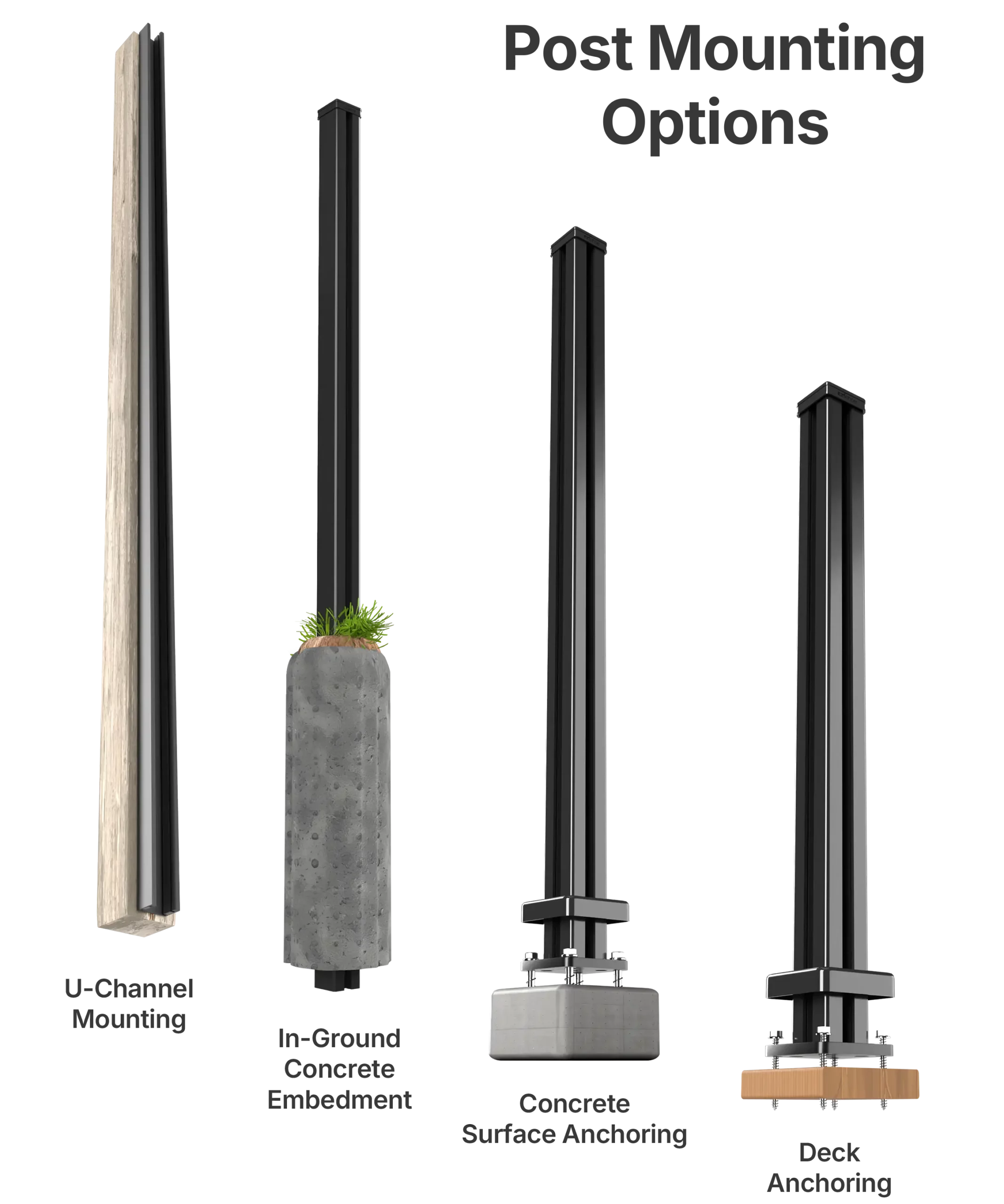
Each of these methods is suited to different applications and site conditions, ensuring that your fence will withstand the elements for years to come.
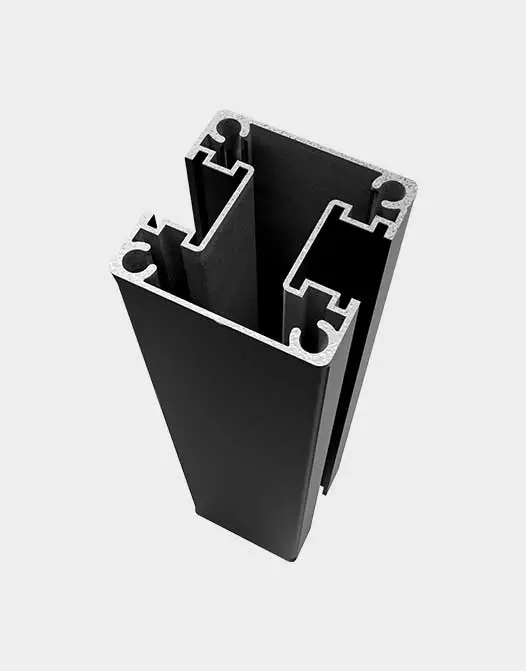
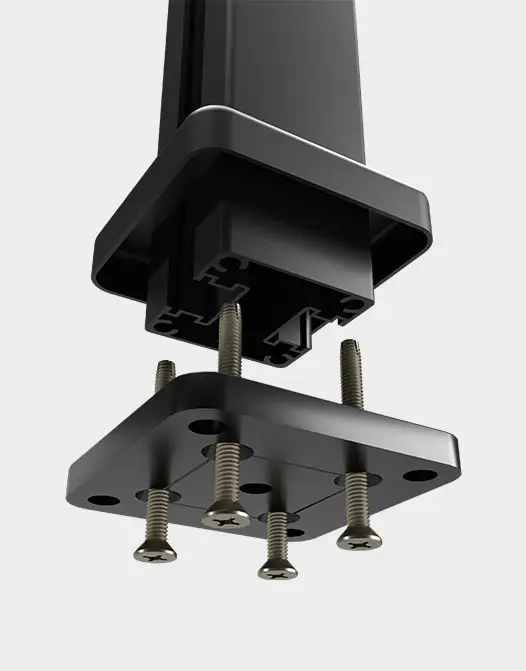
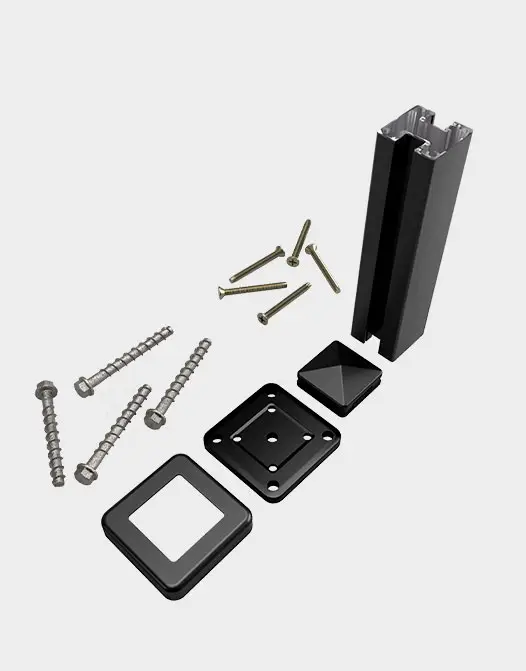
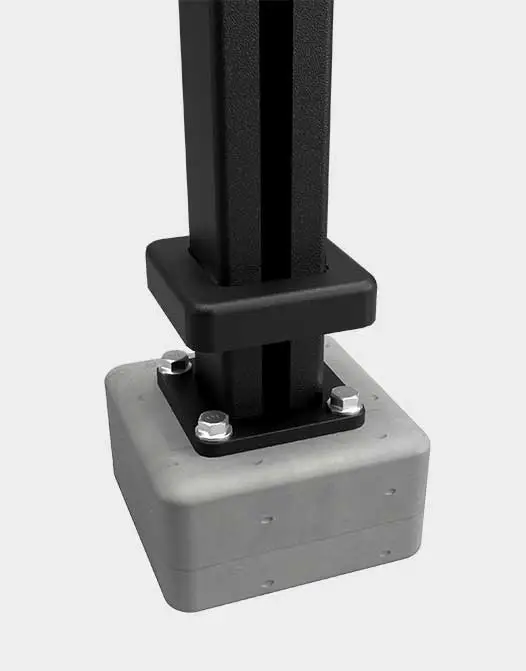
No-Dig Installation: Concrete Surface Anchoring for Patios
This “no-dig” method is an ideal solution for applications on existing patios, sidewalks, or decks. It involves using a sturdy post base plate that is anchored directly to the finished surface, offering a faster and easier installation process than in-ground methods.
The user’s 2.5×2.5-inch aluminum posts are explicitly compatible with this method, utilizing specialized base plates and strong fasteners. The surface must be a minimum of 4 inches thick and rated at least 3500 psi to provide adequate support.
Concrete expansion anchors are drilled into the surface to secure the base plate. This installation method is well-suited for urban and residential projects where digging is not feasible or desired, such as around pools or on raised platforms. It is also easy to repair or remove and can be adjusted to level the posts and compensate for the weight of gates.
Wind Resistance:
- Post + Base assembly can resist 90km/h wind gusts occasionally for standard size panels (6ft high x 6ft center to center).
- Anchors/Concrete resistance will vary depending on the quality of the concrete and the edge distance.
- Span can be reduced to increase overall wind resistance.
Surface Minimum Requirement:
- Minimum thickness of 4 inch
- Minimum width of 8 inch (2 inch distance from any edges of the base to the edge of the surface)
- Concrete should be rated at least 3500 psi (25MPa)
Deck Anchoring: Securing Posts to Wood or Composite Decks
Deck anchoring is a method for installing fence posts directly to a deck’s structure. This method uses post bases combined with specialized fasteners to secure the posts firmly to the wood or composite decking without compromising the deck’s integrity.
For a secure installation, the wood structure must be properly braced to support the fence panels’ weight and resist wind loads. This method is best for residential decks, pool surrounds, or other raised platforms with a wood structure.
Wind Resistance:
- Post + Base assembly can resist 90km/h wind gusts occasionally for standard size panels (6ft high x 6ft center to center).
- Anchors/Wood resistance will vary depending on the quality of the wood structure and the depth embedment of the screws
- Span can be reduced to increase overall wind resistance.
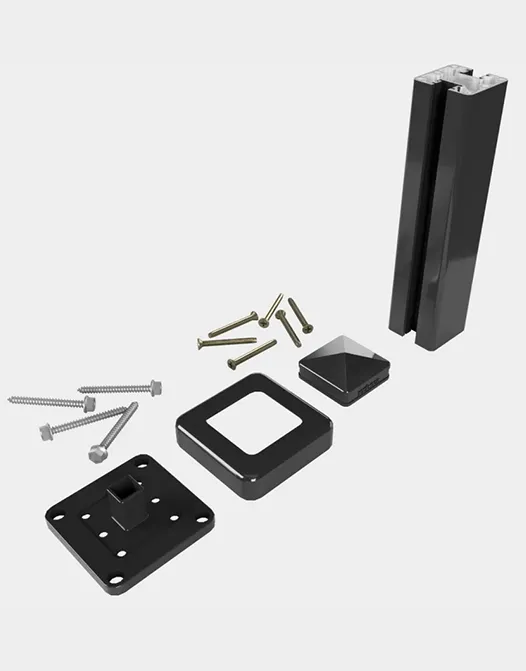
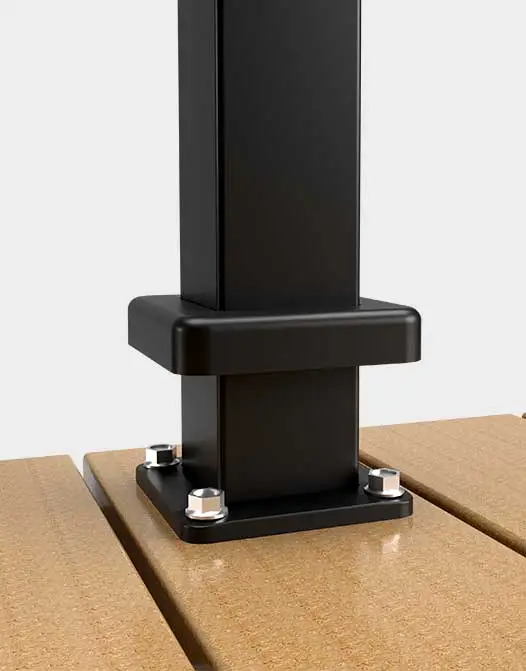
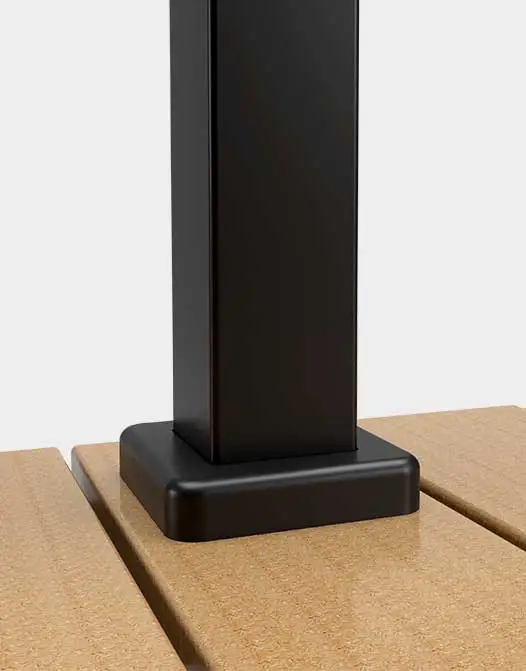
Structure Minimum Requirement:
- Screws should be surrounded by ¾ inch and embedded by at least 2.5 inch of solid structural wood.
- Wood structure should be properly braced to support all moments created by the wind on the fence panels.
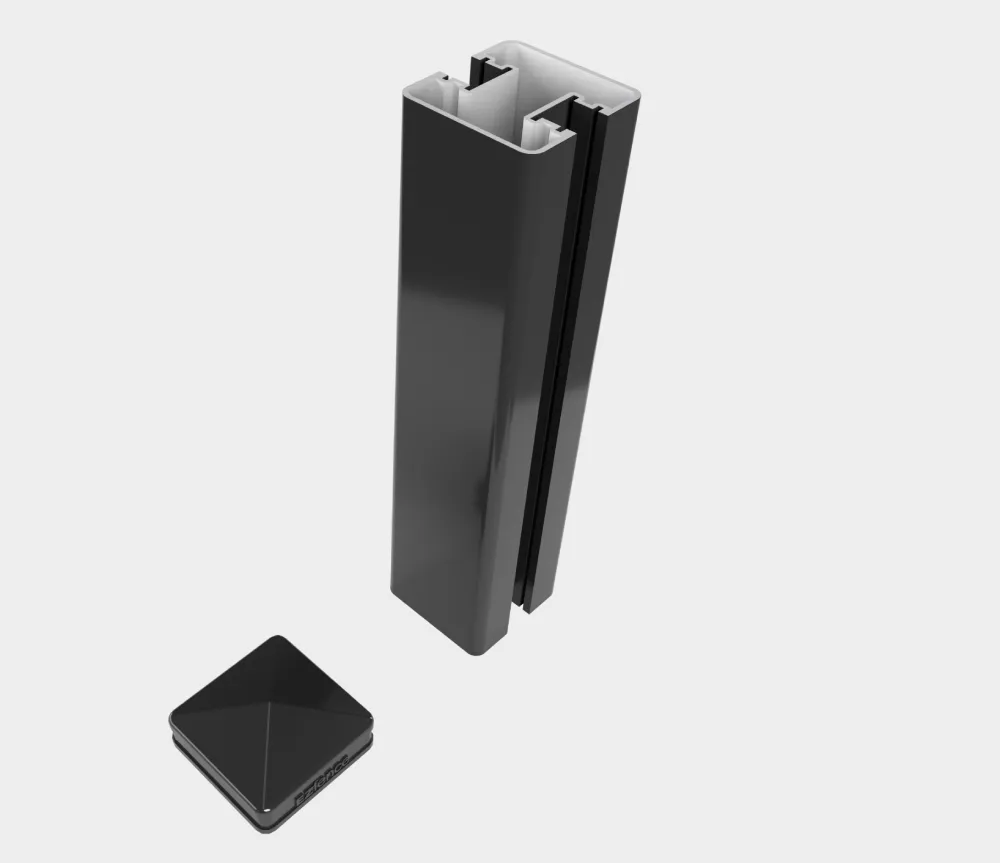
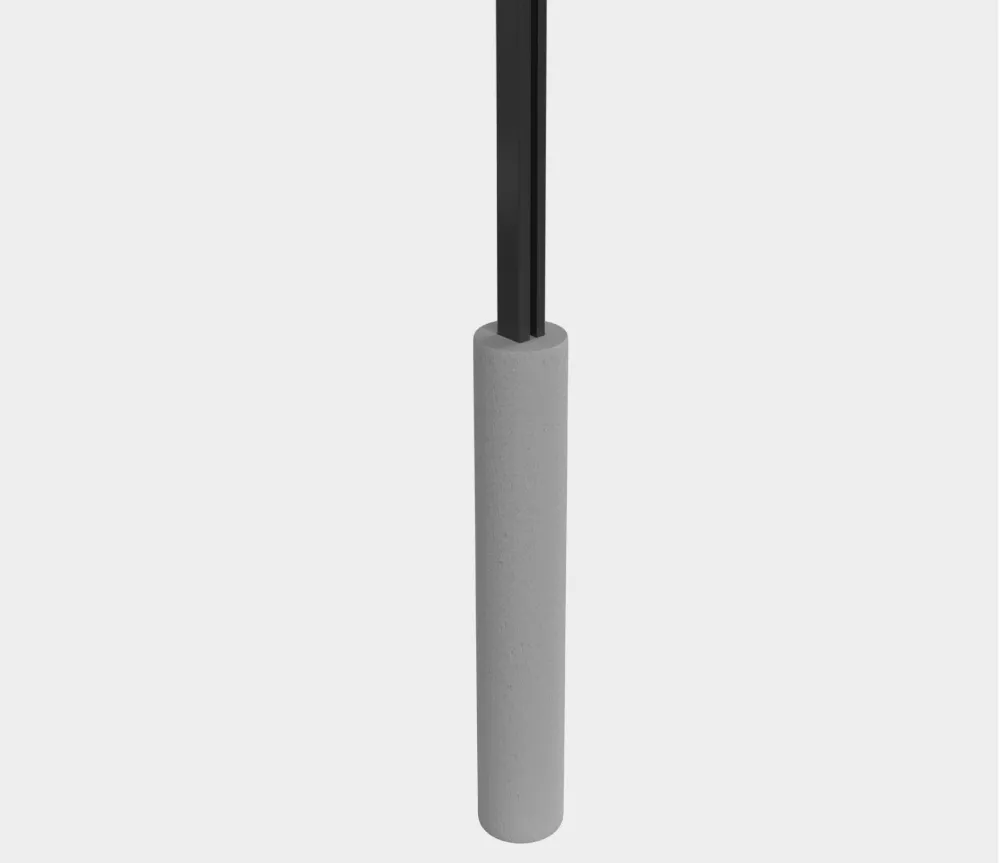
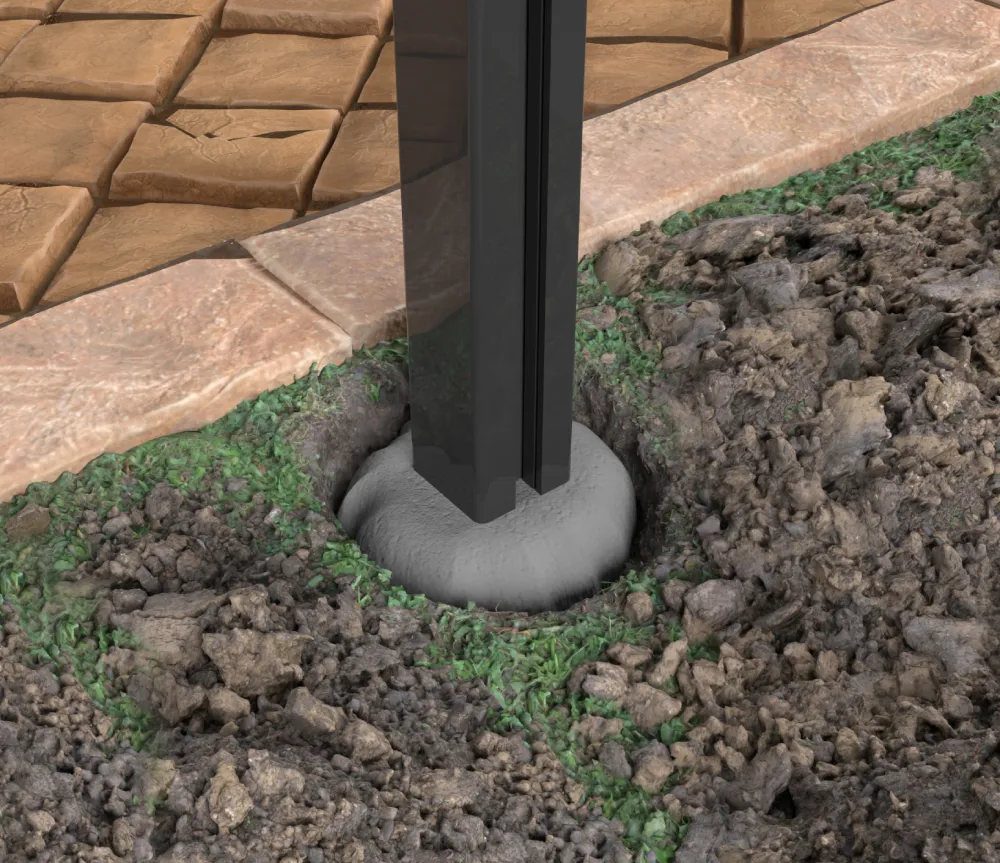
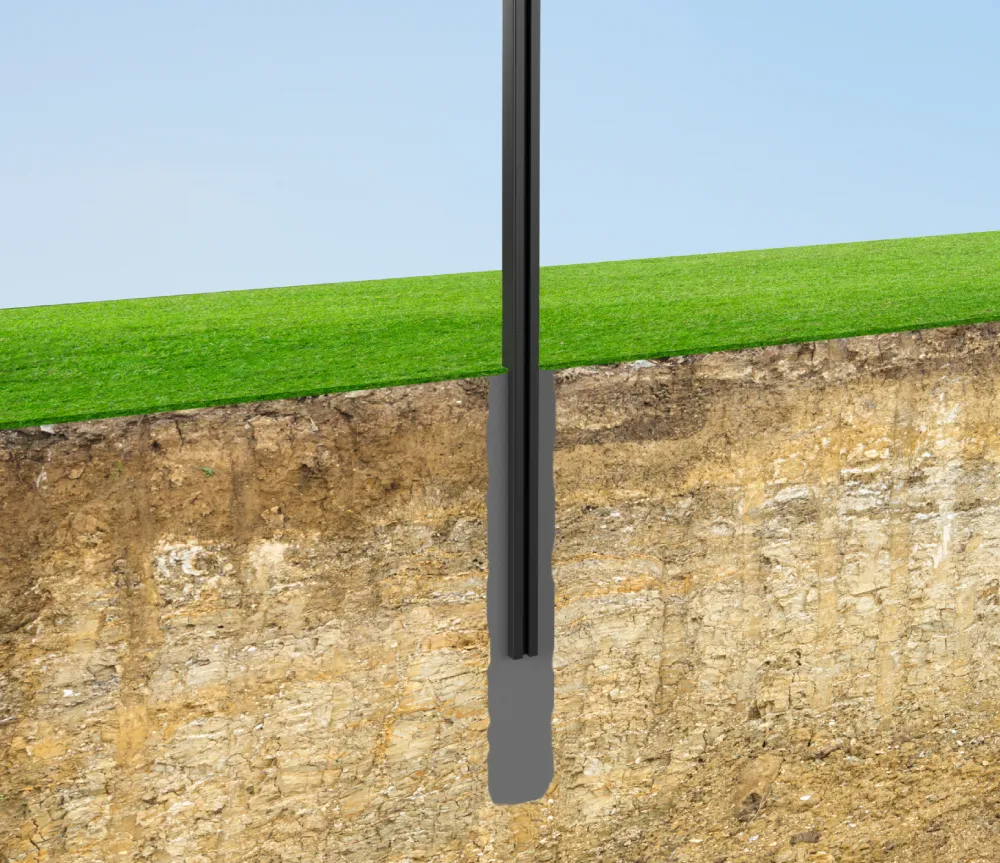
Permanent Stability: In-Ground Concrete Embedment
This traditional method is widely regarded as a solid and permanent way to secure a fence post, providing stability and longevity. The process involves digging a hole, placing the post, and filling the hole with concrete to create a solid foundation.
For Canadian climates, it is crucial to dig to a depth that extends below the local frost line to prevent frost heave. A general rule of thumb is to dig at least 4 feet deep. The hole’s diameter should be approximately three times the width of the post.
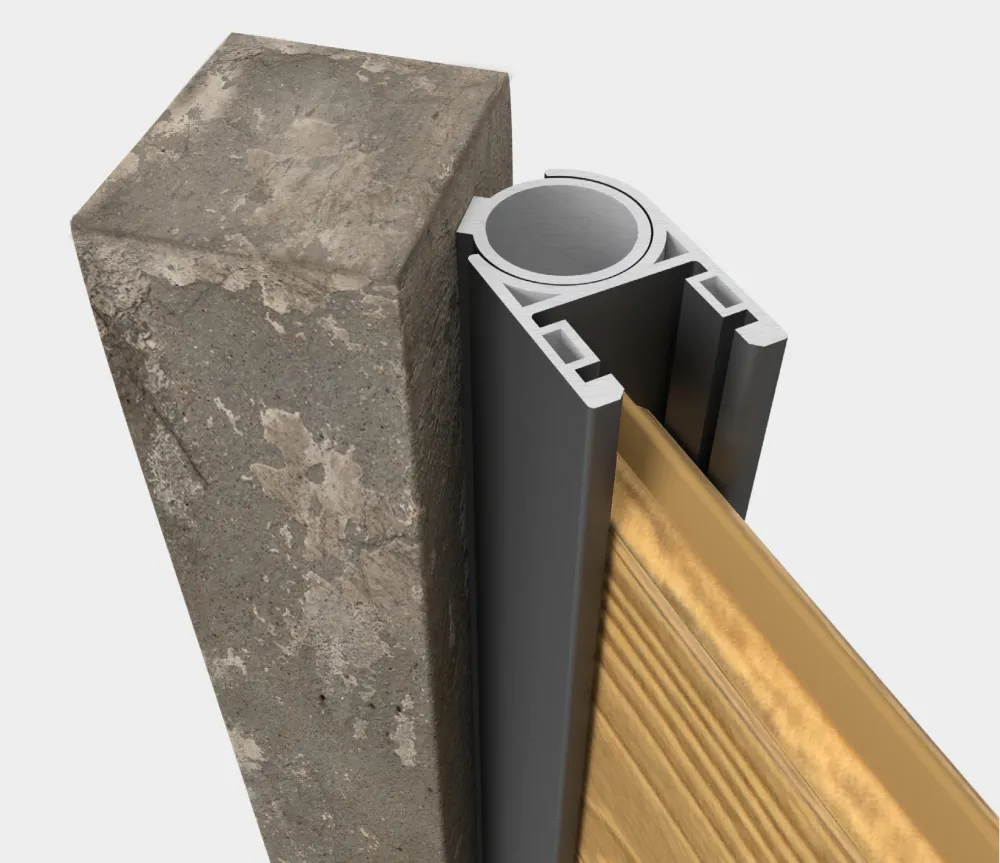
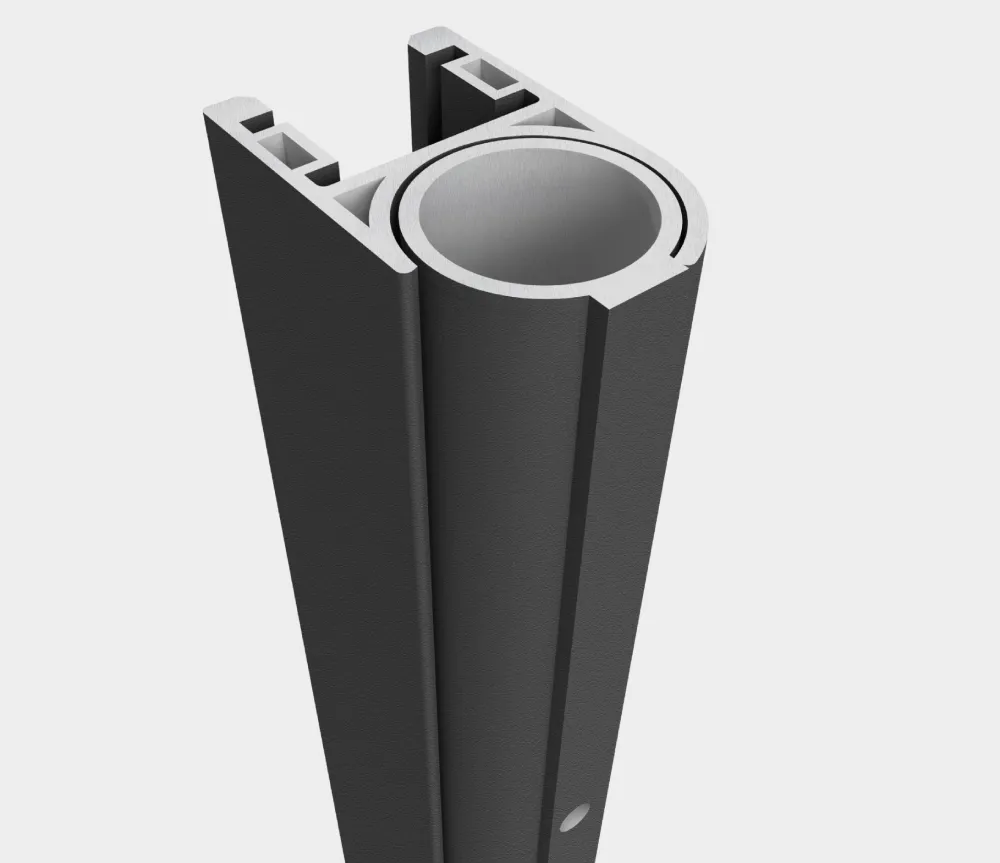
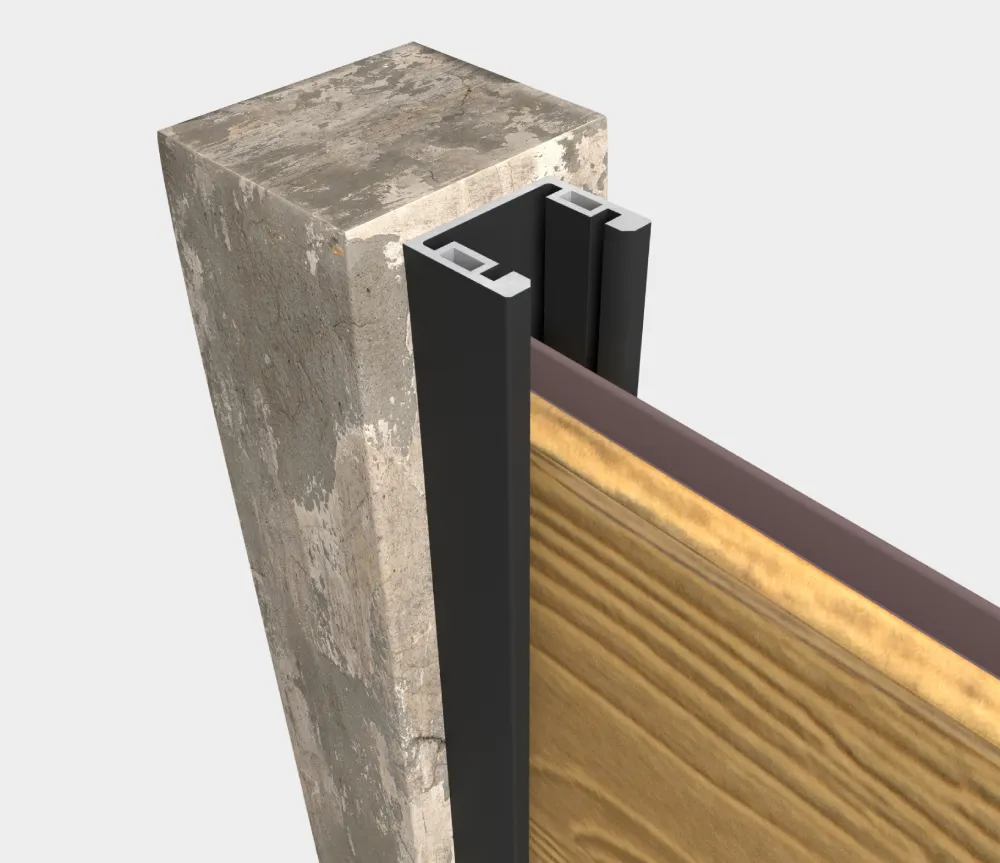
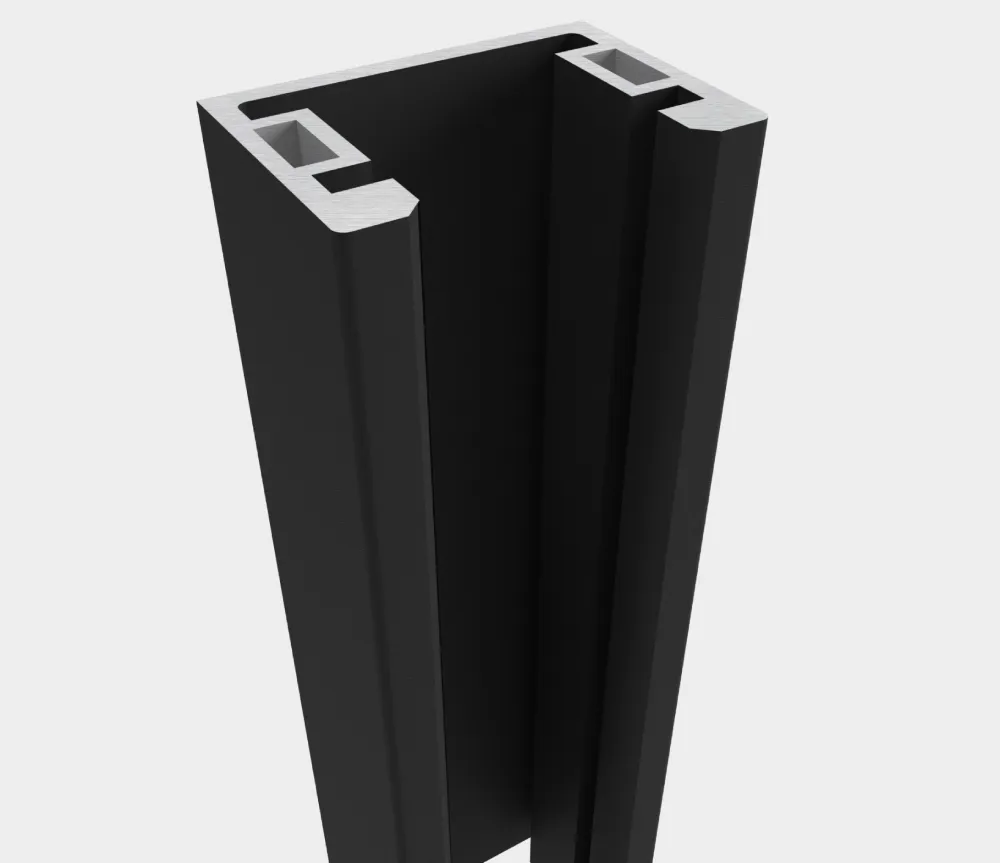
Wall-Mounted Solutions: U-Channel & Angle Channel Mounting
This method is specifically designed for attaching a fence to an existing post or wall. Instead of installing a full post, it uses either a U-shaped channel (for perpendicular surfaces) or an angle channel (for non-perpendicular surfaces). The channels are secured to the existing structure, and the fence boards are then installed into the channels. This is a cost-effective solution for integrating a new fence with existing structures.Best For: Attaching fence to a wall, Attaching fence to an existing post
Benefits: Compatible with all EZfence options and parts, Cost-effective